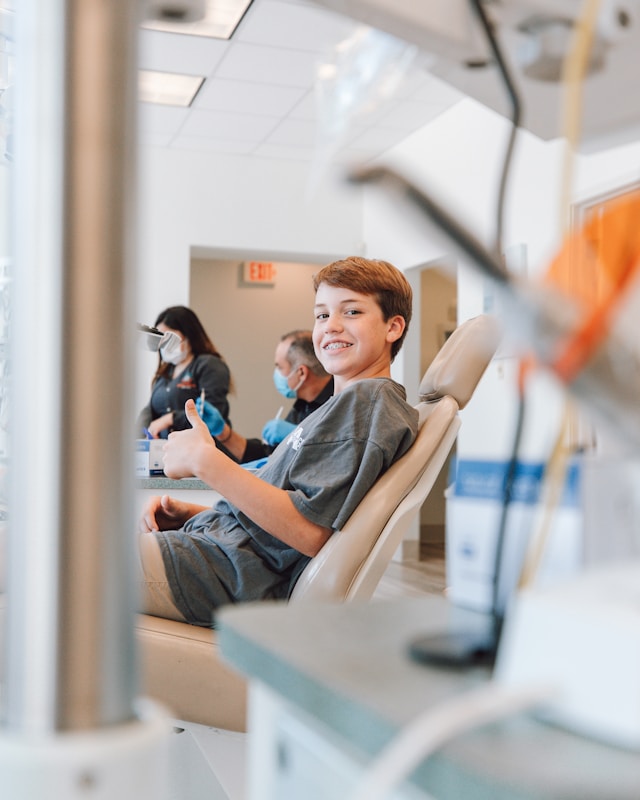
You might be feeling worn out from the struggle that starts long before you even reach the dental office. The tears when you mention a checkup. The tummy aches in the car. The tight grip on your hand in the waiting room. You know your child needs healthy teeth, yet every visit to a family dentist in Richmond, IN feels like an emotional battle for both of you.end
It often feels like there is a “before” and “after” around dental care. Before the anxiety took hold, appointments were just another task. After the fear began, everything changed. You started planning your day around possible meltdowns, wondering if you are pushing too hard, and worrying about what this might mean for your child’s long-term health.
Here is the short version. Many children are anxious about dental visits, and it is not a sign that you have done anything wrong. A good family dentist for anxious kids uses specific, proven strategies to help children feel safe, understood, and more in control. When you understand those strategies, you can choose the right dentist, prepare your child with confidence, and turn appointments from a crisis into something that feels manageable and sometimes even calm.
Why is dental anxiety so intense for children, and what makes it worse?
Dental fear in children rarely comes out of nowhere. It might start after a painful procedure, a rushed visit, or even a scary story they heard from someone else. For younger children, the sounds, bright lights, and unfamiliar tools can feel overwhelming. They may not have the words to say “I am scared,” so it comes out as tears, clinginess, or refusal to open their mouth.
Because of this tension, you might wonder if you should simply “power through” appointments and hope your child grows out of it. The problem is that forcing can backfire. When a child feels trapped or not listened to, their fear often grows. That can lead to more resistance, more time off work for you, and sometimes skipped appointments that allow cavities and infections to build up quietly.
There is also the emotional weight. You may leave visits feeling guilty and drained. You want to protect your child, yet you also feel responsible for their health. It can feel like there is no good option. Either you risk a meltdown in the chair, or you risk long-term problems with their teeth and gums.
This is where an experienced family dentist for kids with dental fear makes a real difference. The American Academy of Pediatric Dentistry has published detailed guidance on behavior support and communication techniques for children, which many family and pediatric dentists follow. You can see that guidance described in their behavior guidance recommendations. The goal is simple. Help children feel safe enough that care becomes possible without trauma.
What strategies do family dentists use to calm anxious children?
Most successful dentists do not rely on one trick. They use a mix of communication, environment, and behavioral tools. Here are five of the most common approaches you are likely to see.
1. “Tell–Show–Do” to build trust
Before anything goes into your child’s mouth, a skilled family dentist explains what will happen in simple words your child can understand. They show the mirror, air, or suction on a finger or a stuffed animal. Only then do they gently start the real procedure. This sequence makes the unknown more familiar, which lowers fear.
2. Child friendly language and distraction
You might hear phrases like “sleepy juice” instead of “anesthetic injection” or “counting teeth” instead of “examining your molars.” The team will often use stories, music, or videos as a distraction. When a child’s mind is focused on a story or a screen, their body usually relaxes.
3. Positive reinforcement and small wins
Good behavior guidance breaks the visit into tiny steps. “Can you sit in the chair?” “Can you open like a lion for three seconds?” Each success is praised, which gives your child a sense of progress and control. Over time, these small wins rewrite their memories of the dental office from “scary” to “I can handle this.”
4. Comfort positioning and parental support
For younger children, some dentists use “knee to knee” positions with a parent or allow a parent to hold a hand or stay within the child’s line of sight. You may be given a clear role, like helping with deep breathing or counting along. When the child feels anchored by you and supported by the team, anxiety often eases.
5. Stepwise care and, when needed, advanced options
If fear is very strong, a thoughtful family dental care provider may suggest shorter, more frequent visits at first, just to build comfort. In some cases, they might discuss options like nitrous oxide or other sedation approaches, especially for extensive treatment. These decisions are made carefully and usually guided by standards like those described in the AAPD’s behavior guidance policy.
So where does that leave you as a parent who just wants a smoother visit and a healthy child?
How do these strategies compare, and what should you look for?
It can help to see the differences between a typical “get it done” approach and care that is truly designed around anxious children. The table below highlights what to watch for when you visit or call a potential family dentist.
| Aspect of Care | Rushed / Traditional Approach | Child Centered Anxiety Support |
|---|---|---|
| Communication | Minimal explanation, mostly to the parent | Clear “tell–show–do” steps, spoken directly to the child |
| Time and pacing | Focus on finishing quickly | Flexible pacing, breaks allowed, shorter visits if needed |
| Role of parent | Parent told to “sit back and relax” with little guidance | Parent given a role in calming and supporting the child |
| Behavior tools | Threats or pressure like “If you do not open, this will hurt more” | Positive reinforcement, distraction, choices where possible |
| Long term impact | Higher risk of growing fear and avoidance | Gradual increase in trust, better cooperation over time |
When you visit a practice, notice how the staff speak to your child in the waiting room, how they respond to tears, and whether they seem rushed. Those small moments often tell you more than any advertisement.
What can you do right now to support your anxious child?
You are not powerless in this. There are simple steps you can take before the next appointment that make a real difference.
1. Prepare with honest, calm language
Use simple words and avoid overpromising. Instead of “It will not hurt at all,” try “The dentist’s job is to keep your teeth strong. Some parts might feel strange, and you can always raise your hand if you need a break.” The Centers for Disease Control and Prevention offers helpful guidance on everyday oral care for kids, which can support these conversations.
2. Practice at home through play
Use a toothbrush and a favorite stuffed animal to “play dentist.” Count teeth, pretend to polish, and switch roles so your child gets to be both the dentist and the patient. The National Institute of Dental and Craniofacial Research shares more child-friendly oral health information that can give you simple facts and visuals to use in play. You can find that at the NIDCR children’s oral health resource.
3. Partner with the right family dentist
When you call a potential office, mention your child’s anxiety upfront and notice the response. Do they sound understanding, or do they brush it off? Ask if they use behavior guidance strategies for children and whether you can schedule a short “get to know you” visit first. Even a quick meet and greet can reduce fear before any treatment is needed.
Moving forward with more confidence and less fear
Dental anxiety can feel heavy, especially when you are doing your best, and the visits still end in tears. You are not alone in that feeling. With the right approach from a supportive family dentist and a few simple steps at home, your child can learn that the dental office is a safe place where they are heard and respected.
Change rarely happens overnight, yet each calm conversation, each gentle visit, and each small success builds a new story for your child. One where caring for their teeth does not have to come with fear.