You might be feeling a mix of curiosity and worry right now. You want your smile to look more even and attractive, but you are scared of ending up with that stiff, cookie cutter “Hollywood” grin that does not look like you at all. Maybe you have seen someone whose veneers looked too white, too big, or just slightly off, and a quiet voice in your head asks, “What if that happens to me.” When you choose an experienced dentist in Los Angeles who focuses on natural-looking results, you can greatly reduce the chances of that happening.
That concern is very reasonable. Cosmetic dentistry can do a lot to change a face, which means it can also go too far if it is not handled with care. The good news is that modern cosmetic smile design is built around one core idea. Your teeth should fit your face, your personality, and your age, so the result feels natural, not fake. Cosmetic dentists use careful planning, digital tools, and very human judgment to create symmetry that looks balanced rather than copy pasted.
So where does that leave you. You do not need to become a dental expert, but you deserve to understand how cosmetic dentists think about symmetry, what separates a natural smile makeover from an artificial one, and what you can do to protect yourself from a result you would regret.
Why “perfect” symmetry can look so wrong on a real face
Think about the last time you saw a face that felt “too perfect” in a photo or movie. It might have looked polished, but also a little strange. That is because real human faces are naturally asymmetrical. One eye is slightly higher, one cheek is a bit fuller, one side of the jaw is more defined. Our brains are used to this, so when everything is perfectly mirrored, it can feel unnatural, even if you cannot explain why.
The same thing happens with teeth. You might imagine that straight, identical, super white teeth are the goal. In reality, when every tooth has exactly the same shape and color, the smile can look fake. You may have seen this with some older veneer work. The teeth look like a row of identical tiles, and instead of seeing the person, you only see their dental work.
Because of this tension, you might wonder how cosmetic dentists create a more even smile without crossing that invisible line into “plastic” or “overdone.” The answer lies in how they define symmetry and how they respect the rest of your face.
How cosmetic dentists think about natural symmetry
A skilled cosmetic dentist rarely aims for mathematical perfection. Instead, they focus on “balanced harmony.” That means your smile lines up with key features of your face, while still allowing for those tiny irregularities that make you look like yourself.
Here is what that looks like in practice.
They start with your facial midline. Instead of lining the teeth up with the center of your nose or chin mechanically, they consider where your upper front teeth sit in relation to your eyes, lips, and the way your head naturally tilts. A tiny shift to match the way you actually hold your face can make a huge difference in how real the smile looks.
They design the “dominant” front teeth. In a natural smile, the two upper front teeth are slightly more prominent. The teeth next to them step back just a bit, and the edges are not all in a straight line. A cosmetic dentist will often build in these subtle height differences and gentle curves, so your smile follows the shape of your lower lip instead of forming a ruler straight edge.
They use micro-asymmetry. This is where artistry shows. One tooth might be a fraction of a millimeter shorter on one side. The corner of a canine might be slightly softer on the side where you are older fillings have worn it down. These details are tiny, but together they stop the smile from looking like a set of identical crowns.
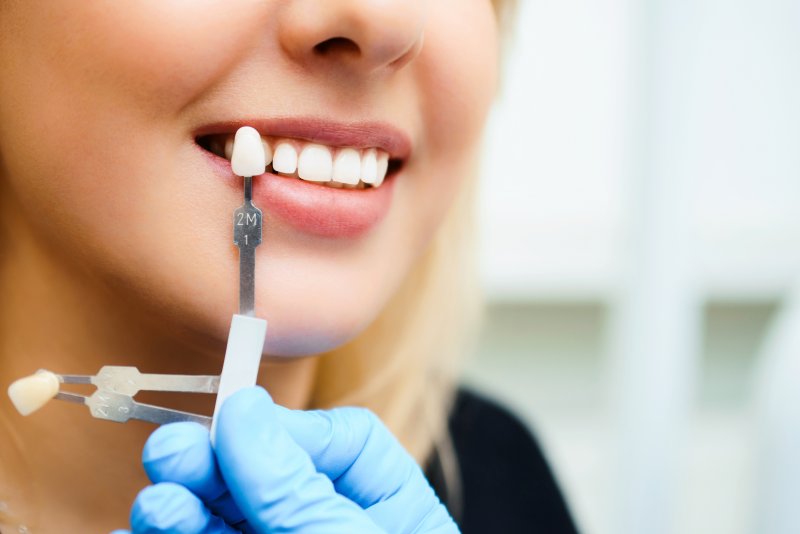
They choose natural color and texture. Many people ask for the whitest shade possible, then realize it looks out of place with their skin tone or age. Cosmetic dentists often guide patients toward a brighter, yet believable shade. They may also add subtle surface texture so light reflects like it does on natural enamel, instead of giving that flat, plastic shine. If you want to see how professionals describe this, the California Dental Association’s guide to cosmetic dentistry options is a helpful resource.
So, creating symmetry without looking artificial is not one decision. It is a chain of small choices that all point in the same direction. The question then becomes, how do you decide what kind of treatment is right for you.
What if you do nothing, “DIY,” or see a cosmetic dentist
You might be weighing different paths. Maybe you are wondering if whitening strips and online aligners are “good enough,” or if you should invest in a professionally planned smile makeover. Each choice has tradeoffs in cost, control, and how natural the result will look.
| OPTION | WHAT IT TYPICALLY INVOLVES | BENEFITS | COMMON RISKS OR LIMITS | HOW IT AFFECTS NATURAL SYMMETRY |
|---|---|---|---|---|
| Do nothing | Regular cleanings, no cosmetic changes | No extra cost. No treatment risk. You stay 100 percent “you.” | Ongoing wear, discoloration, or crowding can slowly worsen. | Your existing asymmetry remains. This can be charming or bothersome, depending on how you feel about it. |
| “DIY” or mail-order options | Whitening kits, aligners without in-person exams | Lower upfront cost. Convenience. Some improvement in color or alignment. | No full exam to catch hidden problems. Risk of gum irritation or bite issues. Limited customization to your face. | Alignment may improve, but the plan is usually tooth-focused, not face-focused, so the smile can look slightly generic. |
| Professional cosmetic dentist | In-person exam, photos, digital design, possible veneers, bonding, contouring, or orthodontics | Thorough planning. Custom design for your face, age, and personality. Stronger materials and long-term strategy. | Higher cost. Requires time and clear communication. Results depend heavily on the dentist’s skill. | Symmetry is guided by your facial features. Micro-asymmetry is built in, so the result looks natural instead of artificial. |
If you want a sense of how a carefully planned smile transformation can work, the University of Rochester Medical Center offers a useful overview of what a professional smile makeover usually includes.
Three steps you can take right now to protect yourself from an “artificial” smile
1. Get clear on what “natural” means to you
Before you meet any cosmetic dentist, take a few minutes to define your own comfort zone. Look at photos of your current smile. Notice what you actually like, not just what you want to change. Maybe you like that one tooth is slightly rotated because it feels like “you,” but you wish your front teeth were less crowded or less stained.
Collect a few smile photos you admire. Choose people who are similar in age and general style. Mark what you like. The curve of the teeth. The color. The way the teeth match the lips. Bring these to your consultation. This gives the dentist a clear picture of how far you want to go, and where you want to stop.
2. Ask specific questions about planning and symmetry
During your consultation, you are not just there to be evaluated. You are also evaluating the dentist. Good cosmetic dentists are happy to talk through their thought process. You can ask questions like.
“How will you make sure my teeth fit my face, not just a template.”
“What changes would you recommend if I want my smile to stay age appropriate.”
“Can you show me examples where you aimed for natural symmetry instead of a perfect line.”
Notice whether the dentist talks about your lips, gums, and face, or only about individual teeth. A thoughtful answer is a good sign that they value natural harmony over a one size fits all look.
3. Insist on a preview before committing
A careful cosmetic dentistry plan usually includes some form of preview. This might be digital imaging, a mock-up on a model of your teeth, or temporary restorations that you can wear for a short time. Ask if you can see and even “test drive” the proposed shape and length before the final work is done.
Use that preview time to check how the teeth look in different lighting and from the side, and how you feel when you talk, laugh, and rest your face. Do you still recognize yourself. Do you feel at ease. If something feels off, say so clearly. A good cosmetic dentist will adjust the design so your final smile feels like a refined version of you, not a mask you are putting on.
Moving toward a smile that feels like you
Wanting a more balanced, attractive smile does not mean you are vain. It usually means you are tired of hiding in photos or overthinking what people see when you talk. It is normal to be afraid of looking artificial, especially when you have seen examples that went too far.
The truth is that the best cosmetic dentist work is almost invisible to everyone but you. People notice that you look more rested, more confident, and more “put together,” but they cannot quite tell why. That is the power of natural symmetry. It supports your face instead of stealing the spotlight.
You do not have to rush. Start with information, a consultation, and honest conversations about your goals. With the right planning and the right partner, you can have a smile that feels authentic, expressive, and fully your own, without crossing into that artificial look you are trying to avoid.