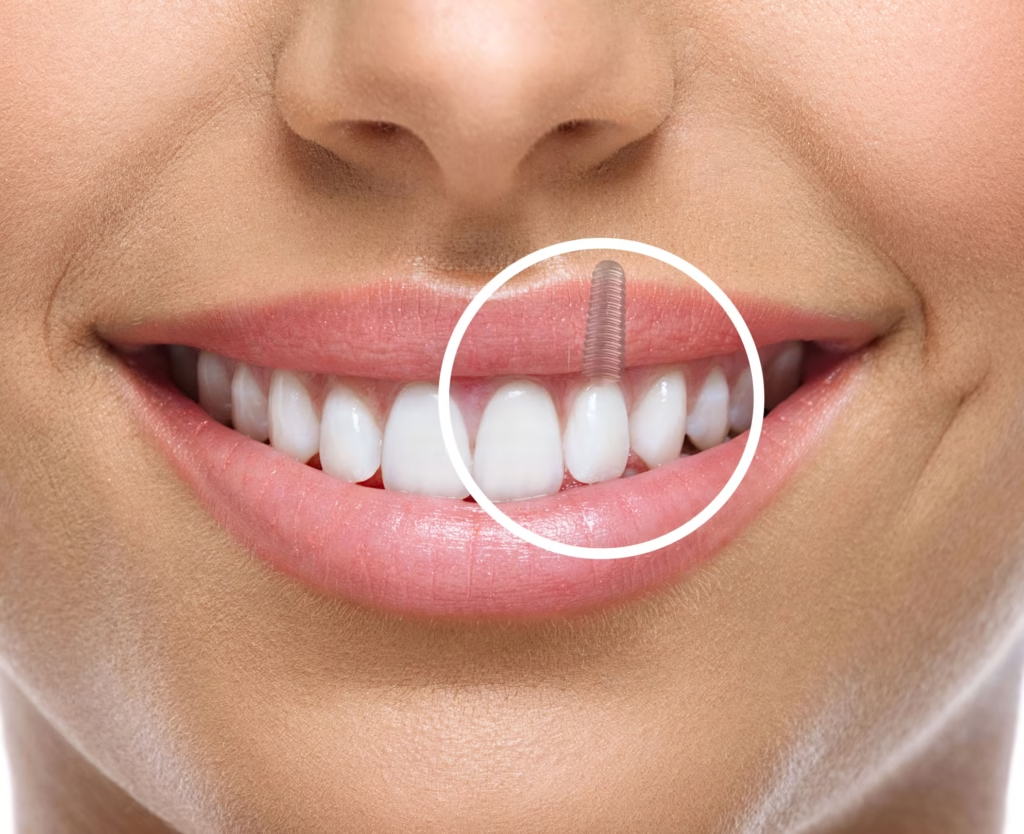
Dental implants can restore your bite, your speech, and your self‑respect. Yet success depends on where and how each implant sits in your jaw. Even a small error can cause pain, early failure, or lasting regret. Today, 3D imaging gives your dentist a clear picture of your bone, nerves, and sinuses before treatment starts. This technology turns guesswork into measured planning. It helps protect healthy tissue. It also supports strong, long‑lasting results. When you see a prosthodontist in Surprise, AZ, 3D scans guide the exact angle, depth, and position of each implant. You gain a safer surgery plan. You also gain realistic expectations about cost, healing, and outcome. This blog explains how 3D imaging works, why it matters for your health, and what you should ask before you agree to treatment. You deserve careful planning and honest answers.
What 3D imaging shows that regular X rays miss
Standard dental X-rays show flat pictures. Your mouth is not flat. Your jaw bends. Your nerves twist. Your sinuses sit close to your back teeth. A flat film can hide thin bone or crowded roots. That can lead to surprises during surgery.
3D imaging, often called cone beam CT, creates a full model of your teeth and jaws. You see height, width, and depth. You see the shape of your bone. You see the path of nerves. You see the edges of your sinuses.
With this view your dentist can
- Measure bone height and thickness at each implant site
- See the exact path of the main lower jaw nerve
- Check sinus shape and size near upper back teeth
The National Institute of Dental and Craniofacial Research explains how bone and tooth support affect oral health.
Why precision matters for your safety
An implant is a small screw. Your jaw holds it under pressure from chewing. That pressure needs support from solid bone. If the implant sits in thin or weak bone, it can loosen. It can cause pain. It can fail.
3D imaging helps your dentist
- Avoid cutting or bruising the main jaw nerve
- Stay clear of sinus spaces
- Place implants inside strong bone, not at the edge
These steps lower the chance of numb lips, sinus issues, or repeated surgery. You gain a calmer recovery. You also gain a better chance that your implant will last.
How 3D imaging improves the surgery plan
With a 3D scan, your dentist can plan the whole case before touching your mouth. The scan feeds into planning software. The dentist chooses the size and type of each implant. The dentist sets the angle and depth on the screen first.
Then your dentist can order a custom guide. This is a clear plastic piece that snaps over your teeth or gums. It has sleeves that show where to place each implant. During surgery, the dentist follows the guide. The drill follows the planned path.
This step offers three gains
- Shorter time in the chair
- Less guesswork during surgery
- More stable support for the final crown or bridge
Comparing 2D and 3D imaging for implant planning
| Feature | 2 D X rays | 3 D imaging |
|---|---|---|
| View of bone | Height only. Width hard to judge | Height, width, and depth at each site |
| Nerve location | Often unclear | Clear path of main nerve in lower jaw |
| Sinus detail | General outline | Exact shape, floor level, and thickness |
| Guide for surgery | Usually freehand | Allows custom surgical guides |
| Risk of surprise during surgery | Higher | Lower |
Radiation dose and safety
Many people fear scans because of radiation. That concern is fair. It is also important to weigh risk and benefit. Cone beam scans use more radiation than a single small X-ray. Yet the dose is often close to that of a beneficial mouth series.
You can ask your dentist
- Why a 3D scan is needed for your case
- What type of machine is used
- How the dose compares to regular X-rays
The U.S. Food and Drug Administration shares guidance on dental X-ray safety. You can use this to support your questions and choices.
Who benefits most from 3D guided implants
3D imaging helps almost every implant patient. It becomes even more important if you have
- Missing back teeth near the sinuses
- Bone loss from long-term tooth loss or gum disease
- Previous jaw surgery or facial injury
It also helps if you need several implants at once. Careful planning can line up each implant so your final teeth match your bite and your face. That brings comfort. It also brings a natural look.
Questions to ask before your implant surgery
You have the right to clear answers. Before you agree to implant treatment, you can ask your dentist these three questions
- Will you use 3D imaging to plan my implants
- Can you show me where the nerve and sinus sit on my scan
- How will this scan change your plan compared to regular X-rays
You can also ask about cost and timing. Some offices include the scan in the total fee. Other offices bill it separately. Clear costs help you plan with less stress.
Taking your next step with confidence
Facing implant surgery can stir fear. You may worry about pain. You may worry about money. You may worry the treatment will fail. Careful use of 3 D imaging cannot erase all risk. It can cut many of the largest risks. It also gives you a chance to see your 3D jaw and share in the plan.
When you choose a dentist who uses 3D imaging for precision placement, you choose measured care. You choose planning instead of guesswork. You choose a path that respects your body and your trust.